

E-Bike Mid-Drive Motor Clutch: The Underrated Component That Defines Your Ride
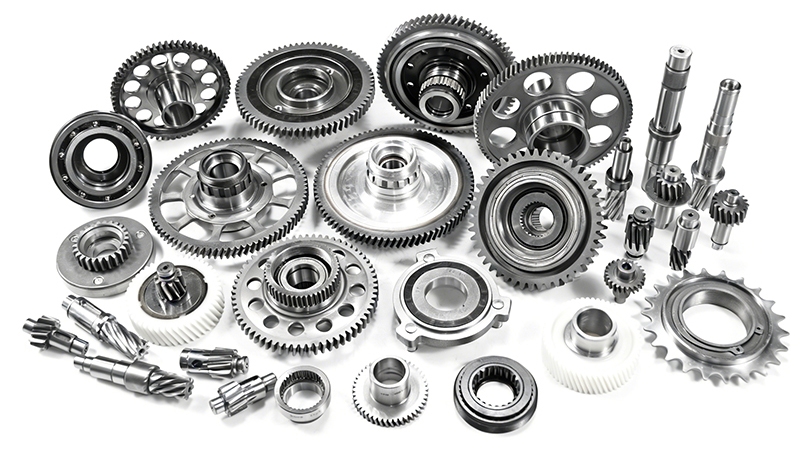
In a mid-drive motor system, the clutch is often the most overlooked component. It's not large, yet it directly affects riding feel, range performance, and drivetrain reliability. A small clutch can be the difference between a mid-drive motor that rides well and one that doesn't.
What Does the Clutch Do in a Mid-Drive Motor?
The core function of a mid-drive motor clutch can be summed up in one sentence: rigid connection when power is needed, complete disengagement when it's not.
Specifically, it handles two critical tasks:
Automatic disengagement during coasting. When you stop pedaling and the motor stops outputting, the clutch automatically disengages, allowing the rear wheel to rotate freely without dragging the motor and gear system in reverse.
Eliminating resistance during human-powered riding. When the battery is depleted or you choose to ride purely under human power, the clutch disengages, completely eliminating the additional resistance from motor magnetic drag and gear transmission. Pedaling becomes light and easy. Without a clutch, riding feels like towing a small generator—heavy and exhausting.
How Does It Work?
Mid-drive motors almost universally use sprag-type one-way overrunning clutches. The principle is identical to that of one-way bearings, but the dimensions, materials, and load capacity are specifically strengthened for high-torque motors.
The operation has two states:
Drive mode (motor working or pedaling under force): The motor output shaft (or torque transmitted through the human-powered chain) drives the clutch inner race to rotate. Through friction, the inner race drives the sprags, pressing them into the narrow space between the inner and outer races to achieve locking. The wedged sprags transmit torque from the inner race to the outer race, which then transfers power through the reduction gearbox to the rear wheel, propelling the vehicle forward.
Coasting/human-powered mode (motor not working): When the rear wheel speed exceeds that of the motor drivetrain (i.e., during coasting or pure human-powered riding), the outer race becomes the driving member relative to the inner race. Its rotation direction pushes the sprags toward the wider side of the raceway, immediately releasing the wedged state. The sprags reset under spring force, and the outer race (connected to the rear wheel) completely separates from the inner race (connected to the motor). The rear wheel rotates freely without spinning the motor's internal gears and rotor.
Why Is It So Important?
Improved range. After clutch disengagement, motor magnetic drag losses and gear friction losses are eliminated. Coasting distance increases, and human-powered riding remains easy even when the battery is depleted.
More natural riding feel. It mimics the coasting experience of a traditional bicycle, avoiding mechanical "dragging" and making the e-bike feel more like a bicycle.
Protecting the motor and reduction mechanism. During high-speed downhill coasting, if the rear wheel drags the motor in reverse, the rotor could overspeed and spin freely, causing accelerated gear wear or even damage. Clutch disengagement completely eliminates this risk.
Smoother assist transitions. In pedal-assist systems, the motor needs to start and stop frequently. The clutch allows power to engage and disengage instantly without interfering with or impacting pedaling, making transitions extremely smooth.
Position and Mainstream Types
The clutch is typically located at the output end of the mid-drive motor, after gear reduction and before final power output to the chainring.
In terms of type, sprag-type clutches have become the absolute mainstream due to their compact structure, low noise, and strong load capacity. Early or low-power motors used ratchet-and-pawl designs, but these have gradually been phased out.
Professional Support from Domestic Manufacturers
Against the backdrop of rapidly developing domestic high-end mid-drive motors, the role of professional clutch suppliers is becoming increasingly prominent. Domestic professional manufacturers represented by Bangni Transmission have long been deeply engaged in the R&D and production of high-torque sprag clutches. Their products are widely used in multiple mainstream domestic mid-drive motor systems, serving as important support for improving overall performance and quality.
Summary
The clutch in a mid-drive motor is essentially an intelligent mechanical switch. It is silent, yet it controls every moment of power engagement and disengagement.
When power is needed—rigid connection, efficient torque transmission. When power is not needed—decisive disengagement, enabling seamless coasting and zero-resistance human-powered riding.
A high-performance clutch is a key marker that distinguishes a high-end mid-drive motor from a low-end product.