
Roller vs Sprag: The Essential Difference Between the Two Main One-Way Clutch Technologies
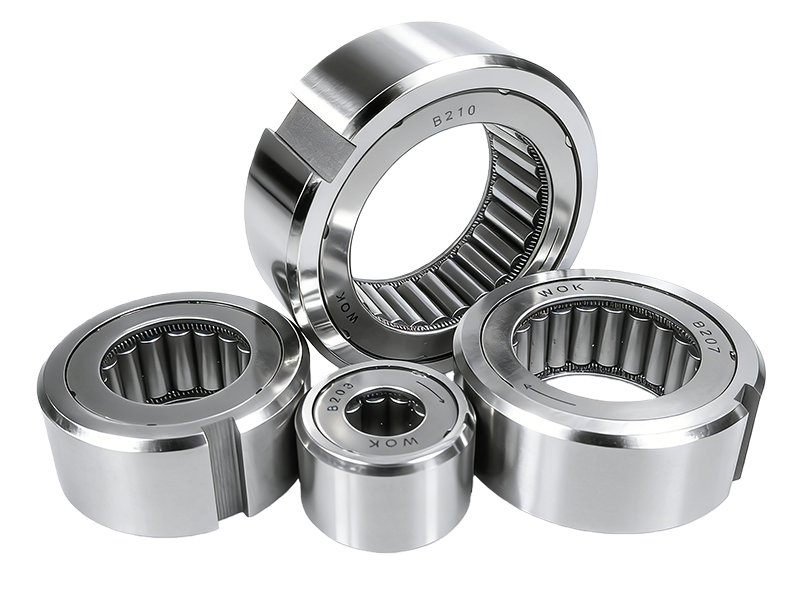
In the world of one-way clutches, roller-type and sprag-type are the two most common—and most commonly confused—designs. They appear similar, both performing the function of "free rotation in one direction, immediate locking in the opposite direction." But beneath the surface, they differ fundamentally in structure, load capacity, and suitable applications.
Choosing the wrong type can lead to degraded performance at best, and equipment damage at worst. This article explains the differences once and for all.
1. Core Differences at a Glance
Comparison Roller-Type One-Way Clutch Sprag-Type One-Way Clutch
Core elements Cylindrical rollers + springs Specially shaped sprags + springs
Locking principle Rollers squeezed and friction-locked in wedge-shaped grooves Sprags wedge themselves between races
Contact form Point or line contact Surface contact
Torque capacity Lower Extremely high (typically 5–10× that of roller type at the same size)
Overrunning speed Lower (centrifugal force on rollers at high speed) Very high (sprag design facilitates high-speed disengagement)
Free-running drag Relatively low Slightly higher (but modern designs have greatly optimized this)
Noise Relatively low Somewhat higher (slight impact sound during engagement/disengagement)
Machining precision Sensitive to wedge groove precision Extremely high demands on sprag shape and consistency
Cost Relatively low Relatively high
Typical applications Motorcycle starter mechanisms, small gearboxes, office equipment Automotive automatic transmissions, heavy industrial equipment, wind power generation
2. Roller-Type One-Way Clutch: Simple, Reliable, Economical
Structure and Principle
The roller-type clutch consists of an outer race, an inner race, cylindrical rollers, and retaining springs. Between the inner and outer races, there is a "wedge-shaped groove" space.
When locking, the inner race rotates relative to the outer race in the locking direction. Under friction and spring force, the rollers are pushed into the narrow part of the wedge groove, jamming the inner and outer races together and transmitting torque.
When overrunning, reverse rotation moves the rollers into the wider part of the wedge groove. The inner and outer races disengage, allowing free relative rotation.
Advantages
Simple structure, low manufacturing cost
Reliable performance in low-torque, low-to-medium speed applications
Low friction drag during free running
Disadvantages
Low torque capacity (point/line contact causes high contact stress, leading to indentations or wear)
Not suitable for high speeds (centrifugal force can cause abnormal roller return, leading to jamming or failure)
Sensitive to wedge groove machining precision
3. Sprag-Type One-Way Clutch: High Load, High Performance
Structure and Principle
The sprag-type clutch consists of an outer race, an inner race, and a series of specially shaped sprags, typically connected by a cage or springs.
When locking, relative rotation between the inner and outer races causes the sprags to tilt or roll slightly, immediately "wedging" between the races. This creates surface contact and a self-energizing effect—the greater the torque, the stronger the locking force.
When overrunning, the sprags tilt in the opposite direction, releasing the locked state and allowing free rotation.
Advantages
Extremely high torque capacity (surface contact significantly reduces contact stress)
Excellent overrunning performance (suitable for high-speed conditions, minimal centrifugal effect)
Compact structure (smaller volume for the same torque)
Disadvantages
More complex structure, higher manufacturing cost
Slight drag and noise may occur during free running
Extremely high heat treatment requirements for sprags and raceways
4. One-Sentence Analogy
Roller-type is like jamming a door with a round pencil—simple and effective, but with enough force, the pencil breaks or the door gets dented.
Sprag-type is like a precisely designed wedge-shaped wooden doorstop—the more force applied, the tighter it jams. It can withstand enormous force and is easy to release.
5. How to Choose?
Your Requirement Recommended Type Reason
High torque transmission Sprag-type Surface contact provides superior load capacity
High overrunning speed Sprag-type Stable and reliable performance at high speed
Limited space with high torque Sprag-type Smaller volume for the same torque
Low torque, cost-sensitive Roller-type Economical and practical
Motorcycle starter mechanisms, small equipment Roller-type Reliable in low-to-medium speed conditions
In actual engineering practice, sprag-type clutches dominate in high-torque, high-reliability core applications such as automotive automatic transmissions and heavy machinery. Roller-type clutches remain very common in cost- and size-sensitive applications such as motorcycle starter drives and home appliances.
6. A Word from a Professional Manufacturer
Bangni Transmission, a well-known domestic manufacturer of one-way clutches, has deep expertise in both roller-type and sprag-type technologies. Whether you need high-torque industrial-grade sprag clutches or cost-optimized roller-type solutions, Bangni Transmission can precisely customize the best solution for your specific operating conditions, helping your mechanical system achieve efficient and reliable one-way transmission.